Rhode Island Dog Registration Information
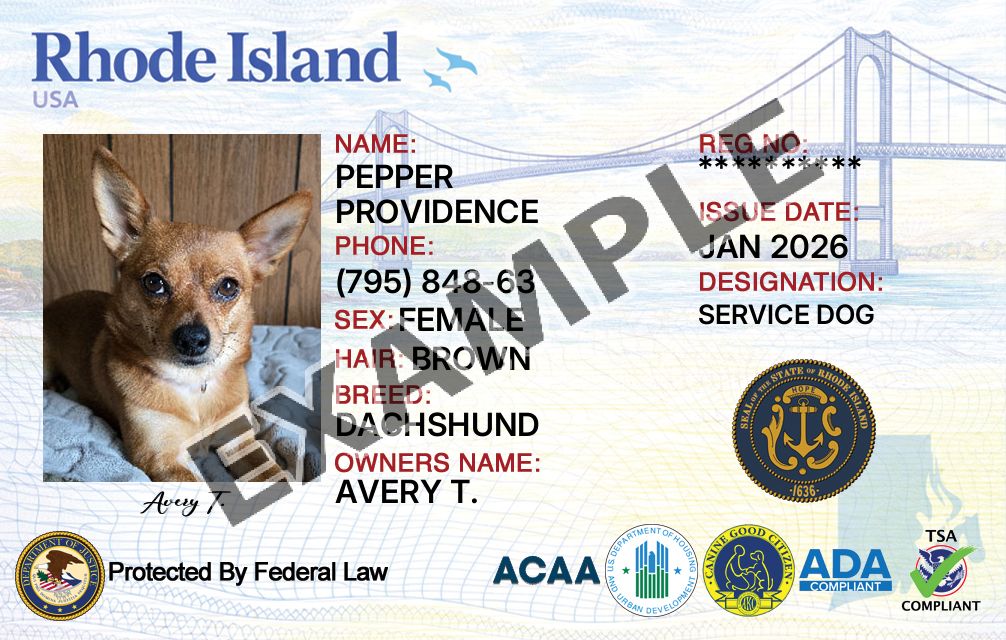
State Licensed, Service Dogs and Emotional Support Dogs in Rhode Island
If you’re searching for where do I register my dog in Rhode Island for my service dog or emotional support dog, the most important thing to know is this: Rhode Island does not have a single statewide “service dog registry” or “ESA registry” that gives your dog legal status. In practice, most residents still need a dog license in Rhode Island through their local city or town clerk, and they must keep their dog’s rabies vaccination current in order to receive that license.
Where to Register or License Your Dog in Rhode Island
Because dog licensing is typically handled locally, below are examples of official Rhode Island offices that issue or administer dog licenses. If your town isn’t listed, contact your city or town clerk (or your local animal control office) and ask about the animal control dog license Rhode Island process in your community.
Warwick City Clerk’s Office (Dog License Division)
- Address: 3275 Post Road
- City/State/ZIP: Warwick, RI 02886
- Phone: (401) 738-2006
- Office hours: Monday–Friday: 8:30am to 4:30pm
- Email not listed on the dog-license page.
Pawtucket City Clerk’s Office
- Address: 137 Roosevelt Avenue, City Hall (3rd Floor)
- City/State/ZIP: Pawtucket, RI 02860
- Phone: (401) 728-0500 ext. 349
- Email: cityclerk@pawtucketri.gov
- Office hours (listed for dog license help): Monday–Wednesday: 8:00am to 4:30pm
North Kingstown Town Clerk’s Office
- Address: 100 Fairway Drive
- City/State/ZIP: North Kingstown, RI 02852
- Phone: (401) 294-3331
- Email: licenses@northkingstown.org
- Office hours: Monday–Friday: 8:30am to 4:30pm
Town of South Kingstown (Town Hall / Town Clerk)
- Address: 180 High Street
- City/State/ZIP: Wakefield, RI 02879
- Phone: (401) 789-9331
- Email and office hours not listed on the cited contact/FAQ pages.
Overview of Dog Licensing in Rhode Island
What “registering your dog” usually means
In everyday terms, “registering” a dog in Rhode Island usually means getting a local dog license from the city or town where you live. Rhode Island law provides that dog owners should obtain a license through the office of the city or town clerk in the community where they reside, and that the annual licensing cycle is tied to a spring renewal period. The dog license is typically accompanied by a numbered tag issued by your municipality.
Rabies vaccination is required to receive a license
A dog license in Rhode Island is connected to rabies prevention: municipalities generally cannot issue a dog license without proof of a current rabies vaccination. That means your rabies certificate (or veterinarian documentation) is usually the most important item to bring, upload, or mail in with your application.
Which agencies are involved (state vs. local)
Dog licensing is mostly local (city/town clerk offices), while rabies response and public-health guidance can involve state public-health authorities. For animal health and rabies-related reporting and resources, Rhode Island’s public agencies (such as the Rhode Island Department of Health and related state animal-health resources) provide guidance and protocols. Locally, animal control officers and local law enforcement may help enforce dog-related ordinances and respond to bite/exposure incidents.
How Dog Licensing Works Locally in Rhode Island
Step-by-step: typical local process
- Find your licensing office: Start with your city or town clerk. This is the most common answer to where to register a dog in Rhode Island.
- Confirm the method: Some municipalities process licenses online only, while others allow mail or in-person licensing. Your clerk’s office will tell you what they accept.
- Provide rabies documentation: Have a current rabies certificate ready. If your documentation expires before the licensing period ends, your town may require an updated certificate.
- Pay the local fee: Rhode Island sets a baseline statewide structure, but towns may add local requirements or set local fees and procedures. Check your municipality’s current fee schedule and accepted payment methods.
- Receive your tag/record confirmation: Once approved, you’ll receive a license tag or confirmation. Keep a copy of the license information with your household pet records.
Why local rules matter
Even though Rhode Island law lays out broad rules (including the general timing and rabies requirement for licensing), the day-to-day process is handled locally. That’s why searches like animal control dog license Rhode Island often lead you to city and town pages: animal control may enforce ordinances, but the clerk’s office is usually where you actually obtain the license.
New dog? Moved to a new town?
If you become a dog owner or move within Rhode Island, you generally should plan to license your dog in the city/town where you currently reside. If you previously licensed in another Rhode Island municipality, contact your new clerk’s office to ask whether they need a new application, updated address, or other verification.
Service Dog Laws in Rhode Island
Dog license vs. service dog status (not the same thing)
A dog license in Rhode Island is a local licensing record that helps your municipality track dogs, confirm rabies vaccination compliance, and support animal-control enforcement. A service dog, on the other hand, is defined by what the dog does: the dog is trained to perform tasks for a person with a disability.
No official “service dog registration” required for legal recognition
Many people ask where to “register” a service dog. In general, legal protections for service dogs do not depend on buying an ID card or registering with a private company. What matters is that the dog meets the definition of a service animal under applicable disability-access laws and is under the handler’s control.
Can a service dog still need a local license?
Yes. A service dog is still a dog, so local licensing and rabies vaccination rules commonly still apply. If you’re trying to answer where do I register my dog in Rhode Island for my service dog, the practical answer is usually: license your dog through your city/town clerk like any other dog, then rely on disability-access laws for public access (rather than a registry).
Emotional Support Animal Rules in Rhode Island
ESA vs. service dog: different legal concept
An emotional support animal (ESA) provides comfort or support that may help with a disability, but ESAs are generally not the same as service dogs. ESAs are not automatically granted the same public-access permissions as trained service dogs.
There isn’t a state “ESA registry” that replaces licensing
If your question is where do I register my dog in Rhode Island for my emotional support dog, keep these two tracks separate: (1) local dog licensing (through the clerk), and (2) any housing documentation process that a landlord may request under fair-housing rules. A local dog license is still typically required regardless of ESA status.
What to do if housing asks for documentation
Housing providers may have a process to request reasonable accommodations. If you need an ESA accommodation, you’ll typically work through your housing provider’s procedure and provide appropriate supporting documentation as required by applicable law and policy. This is separate from the municipal dog license process.
Frequently Asked Questions
Register A Dog In Other Rhode Island Counties
Select your county from the dropdown below to get started with your dog’s ID card. Requirements and license designs may vary by county, so choose your location to see the correct options and complete your pup’s registration.